
Welcome to The Wild Words Project
Recovering lost nature language through classic texts
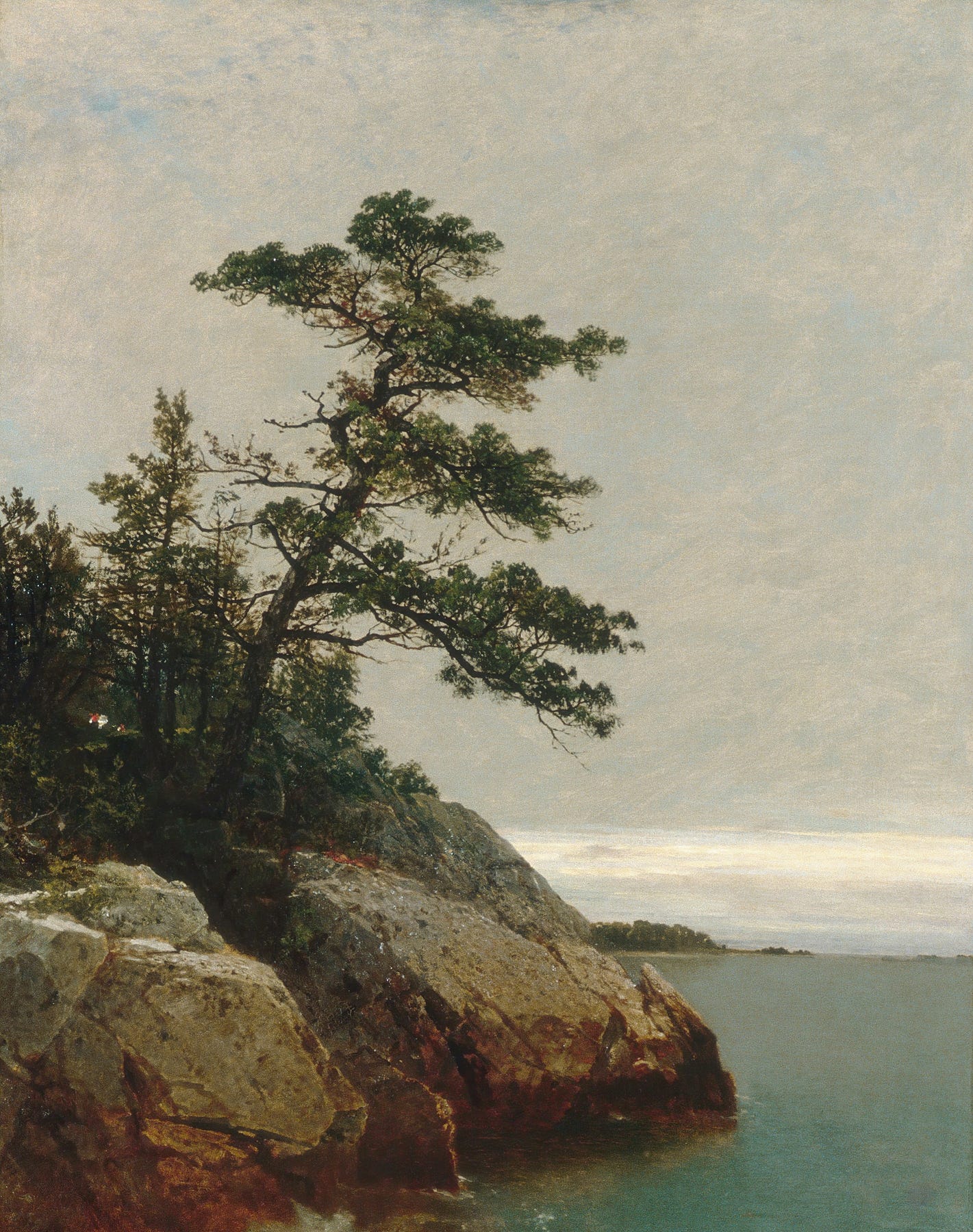
Like the sough of wind through ancient pines, wild words are returning.
SOUGH (as sŭf or sŭgh, the gh guttural)1
noun:
A murmuring, sighing sound; a rushing or whistling sound, as of the wind; a deep sigh.
A gentle breeze; a waft, a breath.
verb: To emit a rushing, whistling, or sighing sound, as the wind.
Quotes: “From the loch would come the sough of a porpoise, or the wild cry of a loon.” —Field, Dec. 12, 1885.
“Its last despairing wails, shrieking and soughing through the lofty fir tops.” —Field, Sept. 25, 1886.
About The Wild Words Project
We are losing our language for the natural world.
As nature words disappear from our dictionaries and fade from common use, we lose more than vocabulary—we lose the ability to see, describe, and truly know the living world around us. When we can no longer name the specific qualities of light filtering through leaves, or distinguish between the textures of different grasses, or capture the precise movement of water over stone, our connection to nature itself begins to thin.
This realization, sparked by reading about the steady erosion of nature terminology from our cultural memory, compelled me to act. The Wild Words Project is my response: a commitment to recover, preserve, and share the forgotten language of the natural world.
The Work
I’m reading my way through early nature writing—essays, memoirs, and observations from the 19th and early 20th centuries, all available through Project Gutenberg. These out-of-print works contain beautiful descriptions of the natural world: words for light, texture, movement, sound, and scent that have largely vanished from contemporary writing.
As I read, I gather. Each post will share my discoveries from a particular essay or book: the specific vocabulary, evocative phrases, and luminous passages that demonstrate what’s possible when writers have rich language for nature at their disposal. This will be a commonplace book made public, a curated gathering of wild words that deserve to be remembered and used again.
Why This Matters
I’m a writer and naturalist, currently working on my novel She Who Walks Softly—a story about a woman who reclaims her true self and discovers her forgotten destiny through nature’s profound wisdom.
My study of ecopsychology has deepened my understanding of how language shapes our relationship with the natural world. When we lack words for what we observe, we observe less carefully. When we can’t articulate the distinctions between different kinds of wind or water, or growing things, those distinctions blur in our minds.
In an age where AI-generated content increasingly dominates our reading, with algorithms favoring common patterns over precise language, the recovery of these forgotten words becomes even more urgent. When rare vocabulary disappears from training data, it risks permanent erasure from our collective linguistic memory.
This project serves multiple purposes: it improves my own nature writing craft, expands my vocabulary, and, most importantly, keeps these words alive. Language, like seeds, needs tending. Without use, these words will shrivel and scatter, lost to time.
I come from a line of people who paid attention to the natural world. My great-grandfather taught me to identify local plants and their uses on long walks. My grandfather taught me mindfulness, patience, and reverence for nature through fishing. My grandmother shared her gardening knowledge and folklore with me. They had words for what they saw because they looked closely. This project honors that tradition of careful observation and precise naming.
For Writers, Poets, and Nature Lovers
Whether you write fiction, poetry, or essays, this collection offers you tools: alternatives to overused descriptions, specific terminology for landscapes and seasons, and ways to render the natural world with greater accuracy and beauty.
All posts are free to read. Paid subscriptions help support The Wild Words Project and the work of bringing these wild words back into the light where they belong.
It’s all connected. We can’t truly care for what we can’t see clearly, and we can’t see clearly what we can’t name precisely.
Thank you for being part of this restoration project.

If something I wrote inspired or brightened your day a little, or anything else you’d like to share… I’d be very grateful to hear about it in the comments. A restack or clicking the little heart 💜 for a “like” would always be appreciated.
Thanks for reading The Wild Words Project! Subscribe for free to receive new posts and support my work. All posts are free to read. Paid subscriptions are greatly appreciated.
If the words are found within them, I will be using definitions from the American Encyclopaedic Dictionary, Revised Edition, 1897. Published by R. S. Peale and J. A. Hil, Chicago and New York. The many-volume set of books includes over 250,000 words and over 55,000 encyclopaedic entries. The insides are still pristine, the covers—not so much. I remember seeing these in the basement of my grandparents. I’ve just unearthed them from storage boxes, and the idea for The Wild Words Project was born.
This project and book of yours sounds so exciting! As a nature-lover myself, I'm keen to relearn words that have gone out of fashion, or have been "forgotten" altogether. I am ready to remember ♥
Great idea